Register
What makes us different
Registration is easy.
To get started, simply complete the onboarding form and we will then be able to help you.
The team are on hand to talk through how to share key business and transaction details, select the jurisdictions and services required and set-up data access or integrations where applicable. Your account manager will then validate information, confirm scope and activate the platform and services for your VAT registration, calculation, submission and payment.
Our people
The Tax Desk team have experience in indirect tax and regulatory compliance, strong professional backgrounds and practical knowledge of how rules are applied by local authorities. This enables them to combine technical expertise with a client-focused approach to deliver accurate, solutions in even the most complex jurisdictions.
How the Tax Desk Platform Works
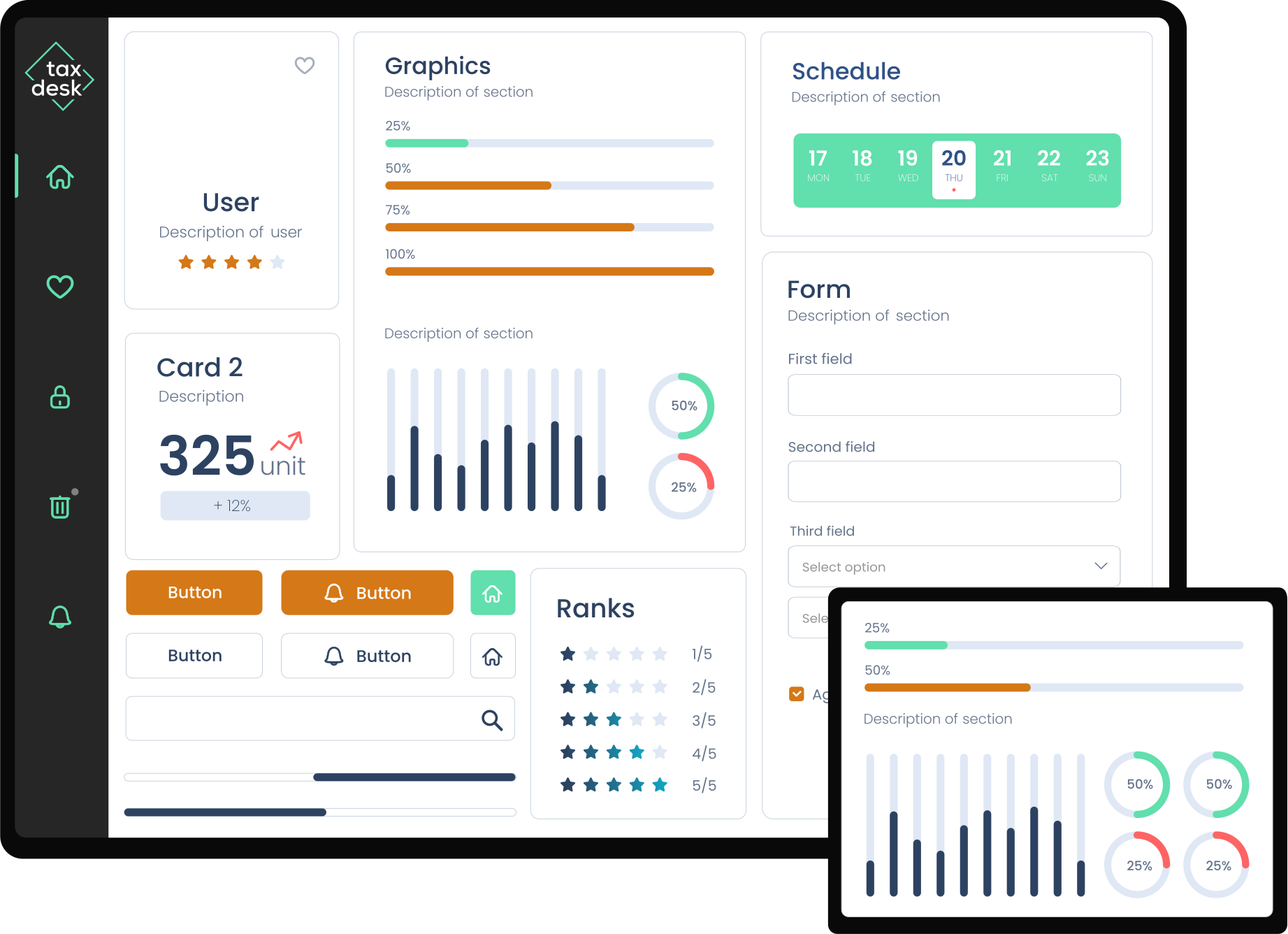
The Tax Desk portal provides a simple, intuitive way to manage global compliance through a single platform. It guides users through onboarding to then automate registrations, return preparation, submission and payment.
CFOs and finance teams can upload or integrate transaction data, validate results, monitor status and access dashboards for full visibility across all jurisdictions.
The built-in workflows, alerts and controls streamlines complex processes into an easy-to-use experience, reducing manual effort and risk enables teams to work efficiently, even when managing high volumes and multi-country obligations.
Couldn't find the answer to your question?
Why do I need a VAT number?
Businesses who provide goods or services in a foreign jurisdiction with a VAT regime must comply with the relevant VAT laws of that country. There are several cases where it will be a legal obligation for a company to register for VAT in the country because they are undertaking taxable business activity. Such activity includes:
- Importing goods into the country for sale or distribution
- Buying and selling goods locally
- Selling goods to individuals over the internet (revenue thresholds may apply)
- Storing goods in a warehouse
- Organising an event in the country (specifically if there is paid admission to the event)
It is the company’s responsibility to register for VAT prior to commencing taxable transactions and once registered, one must comply with the compliance and reporting requirements.
Do I need a VAT number if I am using FBA services?
If you store goods in any European country, then you will be required to have a VAT number. It is mandatory by the law.
When is my VAT number issued?
The length of time required to obtain a VAT number varies from country to country. You can typically expect to receive your VAT number within 4 to 6 weeks from the date when your documents are submitted to the tax authority. Tax Desk will keep in contact with the tax authorities to track the progress of your VAT registration and will keep you informed of any updates. Current timelines:
- France: 7–9 weeks
- Germany: 6–8 weeks
- Spain: 1–2 weeks (VIES activation: 2–3 months)
- Italy: 4–6 weeks
- Poland: 4–6 weeks
- Czech Republic: 4–6 weeks
- UK: 3–4 weeks
What do I need to know about the VIES activation process in Spain?
What documents do I need to have with me while filing the registration/questionnaire?
You will have to fill out your company’s details, therefore it is suggested that you have the following with you:
- Company Extract
- Articles of Association
- ID of the legal representative
- A Bank Certificate of the company
How long does the registration process take?
What does 'Notarisation' mean and what is a 'Hague Apostille'?
Some European tax offices will require that your company documents and registration forms are ‘notarised and apostilled’ before you can submit them to the authorities to apply for a VAT registration.
A notarised document is one carrying authenticated signature(s) of the person(s) authorised or required to sign it, and the signature of a notary public witnessing the signature(s), accompanied by an impression of his or her official notary seal. If a tax office requests it, the authorised signatory will need to visit a Notary Public and sign the required documents in his/her presence. The notary will certify the documents after witnessing the signature.
An apostille is the authentication of a document for use in another country. The apostille certificate confirms the signature, seal or stamp on a document to be genuine so that it will be accepted when presented in another country within the European Union. It is permanently glued to another document and then an embossing mechanism is used to emboss the document with a government crest.
Usually the notary public you engage for the witnessing service will be able to arrange the apostille as well.
Where can I get documents notarized?
Where can I get my documents apostilled?
You are asking for original documents – will I have these returned after the registration is complete?
What is an EORI number?
How many EORI numbers do I need?
Which country's EORI number is the best to have?
What happens if I provide wrong information to Tax Desk when registering?
Can Tax Desk support me if I want to register in the USA, Canada, India, China, Mexico, Australia or Japan?
Why do I need a fiscal representative?
For companies providing goods or services in foreign European countries, there may be a requirement to register for VAT as a non-resident VAT trader. Some countries permit the non-EU established company to register ‘directly’ with the tax office, without having to appoint a local representative.
However, under certain circumstances, the tax authorities will require the company to appoint a Fiscal Representative in the destination country. This company must be tax registered and willing to act as the local representative of the company, managing queries and filing obligations for dealings with the tax authorities. In most cases, the fiscal representative may be jointly liable for all VAT payments of the company.
The tax authorities regard a fiscal representative as the local agent of the foreign trader – which leads to several compliance obligations. Additionally, if the fiscal representative is jointly liable for the trader’s taxes, it is industry practice to require a security deposit or bank guarantee in favour of the fiscal representative to mitigate against potential risks if the company reneges on any liabilities.
What is Form 6166? What is it for and how can I apply?
What is a company's Articles of Association and why do I need to provide it?
What is the Company Extract in the US?
Where can I obtain my company's VAT Certificate in the US?
From the IRS. Tax authorities will require documentation from the IRS regarding the issuing of your company’s Employer Identification Number (EIN).
Why do I need a VAT number?
Businesses who provide goods or services in a foreign jurisdiction with a VAT regime must comply with the relevant VAT laws of that country. There are several cases where it will be a legal obligation for a company to register for VAT in the country because they are undertaking taxable business activity. Such activity includes:
- Importing goods into the country for sale or distribution
- Buying and selling goods locally
- Selling goods to individuals over the internet (revenue thresholds may apply)
- Storing goods in a warehouse
- Organising an event in the country (specifically if there is paid admission to the event)
It is the company’s responsibility to register for VAT prior to commencing taxable transactions and once registered, one must comply with the compliance and reporting requirements.
Do I need a VAT number if I am using FBA services?
If you store goods in any European country, then you will be required to have a VAT number. It is mandatory by the law.
When is my VAT number issued?
The length of time required to obtain a VAT number varies from country to country. You can typically expect to receive your VAT number within 4 to 6 weeks from the date when your documents are submitted to the tax authority. Tax Desk will keep in contact with the tax authorities to track the progress of your VAT registration and will keep you informed of any updates. Current timelines:
- France: 7–9 weeks
- Germany: 6–8 weeks
- Spain: 1–2 weeks (VIES activation: 2–3 months)
- Italy: 4–6 weeks
- Poland: 4–6 weeks
- Czech Republic: 4–6 weeks
- UK: 3–4 weeks
What do I need to know about the VIES activation process in Spain?
What documents do I need to have with me while filing the registration/questionnaire?
You will have to fill out your company’s details, therefore it is suggested that you have the following with you:
- Company Extract
- Articles of Association
- ID of the legal representative
- A Bank Certificate of the company
How long does the registration process take?
What does 'Notarisation' mean and what is a 'Hague Apostille'?
Some European tax offices will require that your company documents and registration forms are ‘notarised and apostilled’ before you can submit them to the authorities to apply for a VAT registration.
A notarised document is one carrying authenticated signature(s) of the person(s) authorised or required to sign it, and the signature of a notary public witnessing the signature(s), accompanied by an impression of his or her official notary seal. If a tax office requests it, the authorised signatory will need to visit a Notary Public and sign the required documents in his/her presence. The notary will certify the documents after witnessing the signature.
An apostille is the authentication of a document for use in another country. The apostille certificate confirms the signature, seal or stamp on a document to be genuine so that it will be accepted when presented in another country within the European Union. It is permanently glued to another document and then an embossing mechanism is used to emboss the document with a government crest.
Usually the notary public you engage for the witnessing service will be able to arrange the apostille as well.
Where can I get documents notarized?
Where can I get my documents apostilled?
You are asking for original documents – will I have these returned after the registration is complete?
What is an EORI number?
How many EORI numbers do I need?
Which country's EORI number is the best to have?
What happens if I provide wrong information to Tax Desk when registering?
Can Tax Desk support me if I want to register in the USA, Canada, India, China, Mexico, Australia or Japan?
Why do I need a fiscal representative?
For companies providing goods or services in foreign European countries, there may be a requirement to register for VAT as a non-resident VAT trader. Some countries permit the non-EU established company to register ‘directly’ with the tax office, without having to appoint a local representative.
However, under certain circumstances, the tax authorities will require the company to appoint a Fiscal Representative in the destination country. This company must be tax registered and willing to act as the local representative of the company, managing queries and filing obligations for dealings with the tax authorities. In most cases, the fiscal representative may be jointly liable for all VAT payments of the company.
The tax authorities regard a fiscal representative as the local agent of the foreign trader – which leads to several compliance obligations. Additionally, if the fiscal representative is jointly liable for the trader’s taxes, it is industry practice to require a security deposit or bank guarantee in favour of the fiscal representative to mitigate against potential risks if the company reneges on any liabilities.
What is Form 6166? What is it for and how can I apply?
What is a company's Articles of Association and why do I need to provide it?
What is the Company Extract in the US?
Where can I obtain my company's VAT Certificate in the US?
From the IRS. Tax authorities will require documentation from the IRS regarding the issuing of your company’s Employer Identification Number (EIN).
How can I return goods under the IOSS scheme?
What happens if you do not opt into the IOSS?
What is the EUR 150 value limit?
Low value goods which qualify for the IOSS are goods in shipments whose intrinsic value at import does not exceed EUR 150 (except products subject to excise duties).
Intrinsic value means the price of the goods themselves when sold for export to the EU. The price should exclude transport and insurance costs (unless they are included in the price and not indicated separately on the invoice) and exclude any other taxes and charges which can be proved to the customs authorities from any relevant document.
My customer pays in a currency other than EUR, what exchange rate should I use?
What information do I need to provide to Tax Desk for the IOSS registration?
What information do I need to provide to Tax Desk for the IOSS return?
After successful registration, you will be able to download a data template from the Portal. You need to provide your sales (including returns) data regarding the eligible transactions in the required template on a monthly basis. Tax Desk will prepare the IOSS return for your review.
The IOSS VAT return will contain the total value of the goods sold, their VAT rate and the total VAT amount to be paid, broken down for each EU Member State where the goods are transported to, as well as broken down in terms of standard and reduced rates.
Upon your approval, Tax Desk will then submit the return.
What is the return deadline?
How do I pay the tax due and what is the payment deadline?
Can I use IOSS for B2B transactions?
Are these changes applicable to the UK now it is no longer part of the EU?
The UK left the EU VAT regime on 31st December 2020. At the same time, the UK withdrew its £15 low-value consignment relief and introduced a new VAT-at-point-of-sale regime (similar to the EU’s IOSS regime) for goods imported into the UK with a shipment value not exceeding £135.
For sales to EU consumers, British resident sellers are now considered as non-EU residents. From 1 July 2021, they are able to use the EU IOSS as non-EU sellers, for sales of eligible goods which will be imported into the EU.
If I have a question, whom should I contact?
What do I need to do if I use the OSS?
You should do the following:
- Apply the VAT rate of the Member State where the goods are dispatched to or where the services are supplied
- Collect VAT from the buyer on intra-EU distance sales of goods or on supplies of services
- Submit quarterly VAT returns to the Member State where you are registered for OSS
- Make quarterly payment of VAT declared in the VAT returns to the Member State where you are registered for OSS
- Keep records of all eligible OSS sales for 10 years
What information do I need to provide to Tax Desk for the OSS registration?
What information do I need to provide to Tax Desk for the OSS return?
After successful registration, you will be able to download a data template from the Portal. You need to provide your sales (including returns) data regarding the eligible transactions in the required template on a monthly basis. If you trade on Amazon, you can also provide the Amazon VAT Transaction Report and use the data template only for transactions outside of Amazon. Tax Desk professionals will prepare the OSS return for your review on a quarterly basis.
The OSS VAT return will contain the total value of the goods sold, their VAT rate and the total VAT amount to be paid, broken down for each EU Member State where the goods are transported from and transported to, as well as broken down in terms of standard and reduced rates.
Upon your approval, Tax Desk will then submit the return.
What is the return deadline?
How do I pay the tax due and what is the payment deadline?
Can I use OSS for B2B transactions?
If I have any questions, whom should I contact?
What happens if I do not use the OSS?
In which country should I register for OSS?
The information provided does not, and is not intended to, constitute legal and/or tax advice; instead, this information is for general informational purposes only. This information may not constitute the most up-to-date legal or other information. Readers of this information should contact their own advisor to obtain advice with respect to any particular legal and/or tax matter. All liability with respect to actions taken or not taken based on the contents of this site are hereby expressly disclaimed. The content on this posting is provided “as is”; no representations are made that the content is error-free.
Trusted in over 40 countries worldwide